

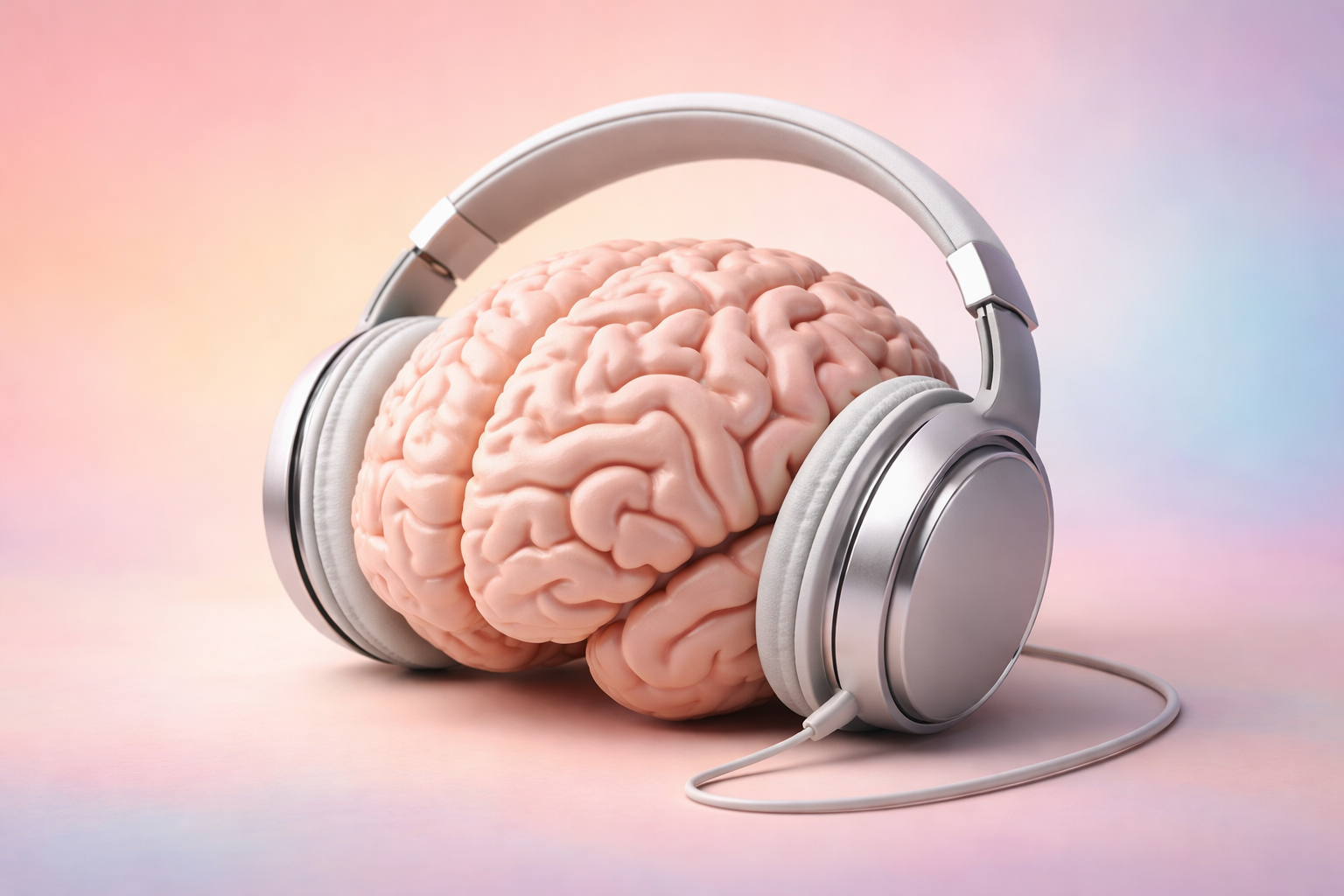
Throughout history, emotions have been conveyed through music. Recent studies demonstrate that emotional music significantly impacts the way people experience certain chronic conditions, like depression. Almost like an innate response, researchers are beginning to understand how music and sound affect the body’s physiological response to stress, the brain’s chemistry, and the way we process emotions.
In a recent Translational Psychiatry article, researchers studied the effects of music on animals that were subjected to chronic and unpredictable stress, as these animals typically exhibit behavior like that observed in humans when experiencing depressive and anxious feelings. However, when these animals were assigned to listen to music regularly, there was an overall improvement in their hormonal balance, a reduction in brain inflammation, and an increase in the production of certain biological growth factors that play a role in our ability to regulate our mood. Therefore, it appears that through these biological changes, the animals were better able to resist developing behaviors associated with depression. This demonstrates that music may help promote resilience to depression at the cellular level.
Research on humans supports this belief. A broad overview of clinical trials published on Cochrane Library reported that music-based therapies consistently reduced symptoms of depression for both active forms, such as singing and playing musical instruments, and passive forms, like listening. Patients treated with music showed increased comfort in social situations, ability to perform daily activities, and better lifestyles overall. In a separate study, the authors suggest that music acts on the reward pathways of the brain that become inactive during depressive episodes. Additionally, music regulates the response to stress, stimulates the calming of hyperactive security alarm systems, and enhances neuroplasticity, the brain’s ability to adapt and heal itself. Therefore, music serves a dual purpose, providing emotional support and biological support.
Important to note, however, is that music is also very individualized. Many people rely on familiar tunes for comfort or relatively slower tempos to help with anxiety. However, some may associate a type of song with a painful event or time in their life, so there are some situations where it may not work in an emotional context. Therefore, the type of songs should be evaluated carefully. Research has consistently shown that music is beneficial in the treatment of depression. When used as a part of daily activities, music can also be utilized as a method for increasing emotional stability. By listening to, playing, or participating in different music related activities on a regular basis, you can reduce the stress associated with daily responsibilities and promote relaxation in your life. Over time, these small habits can increase your ability to cope with problems and establish a more balanced lifestyle.
Sources
Aalbers, S., Fusar-Poli, L., Freeman, R. E., Spreen, M., Ket, J. C., Vink, A. C., Maratos, A., Crawford, M., Chen, X. J., & Gold, C. (2017). Music therapy for depression. The Cochrane database of systematic reviews, 11(11), CD004517. https://doi.org/10.1002/14651858.CD004517.pub3
Fu, Q., Qiu, R., Chen, L., Chen, Y., Qi, W., & Cheng, Y. (2023). Music prevents stress-induced depression and anxiety-like behavior in mice. Translational Psychiatry, 13(1), 1–12. https://doi.org/10.1038/s41398-023-02606-z
Wang, M., Wu, J., & Yan, H. (2023). Effect of music therapy on older adults with depression: A systematic review and meta-analysis. Complementary Therapies in Clinical Practice, 53(101809), 101809. https://doi.org/10.1016/j.ctcp.2023.101809